The caution NCCIH gives
“The risk of harmful effects from probiotics is greater in people with severe illnesses or compromised immune systems.”
Medical disclaimer
Renew31 is a dietary supplement, and this page explains how to read the label caution, which two ingredients need the most careful reading, and who medically reviews the pages.
Quick answer
No dietary supplement is approved by FDA before it is sold, and this one is no exception: FDA says it does not approve dietary supplements for any purpose. This site is information, not advice. The label’s own caution tells anyone under a physician’s care, taking any medication, pregnant, nursing or with a known medical condition to speak to a clinician first. Nine of the ten ingredients sit inside a single 430 mg figure with no amounts of their own, which is lawful. The evidence behind the babchi is for a cream and the federal monograph about the powder is about liver injury, so put it to a clinician; nothing here tells anybody to stop. These pages are medically reviewed by Dr. Savita Srivastava, MD, for accuracy against the label and the cited sources; this is general information, not personal medical advice.
01 The statutory framing
No supplement is approved before it is sold. This one is no exception, and the bottle prints the sentence that says so.
“The FDA does not approve dietary supplements for any purpose.”
“The FDA does not generally review dietary supplements before they are sold to consumers.”
Begin with the category, because it decides how every other sentence here should be read. A dietary supplement is not a medicine. FDA says so of itself, and the two sentences above are the first two of five worth reading once.
5 FDA sentences in all, quoted rather than summarised
Read the five together and the structure of this market appears: nothing on this bottle was reviewed by anybody before it went on sale.
“In fact, in many cases, companies can produce and sell dietary supplements without even notifying the FDA.”
“Dietary supplement companies are responsible for ensuring that their products are safe and accurately labeled.”
“Vitamins, minerals, herbs, and other dietary supplements are not FDA-approved to treat or prevent disease.”
6 marketing roundels, and none of them a regulator’s mark
Six marketing roundels arrived as separate images with this product, including a doctor formulated stethoscope seal that names no doctor and no qualification. None of the six appears on the label, and the label itself prints no seal at all.
Nothing on this site should ever be read as saying that this product has been approved, cleared, reviewed, tested or verified by anybody. The seals page reads all six one at a time, and none of them is a regulator’s mark.
1 disclaimer, printed in full and correctly
“*These statements have not been evaluated by the Food and Drug Administration. This product is not intended to diagnose, treat, cure, or prevent any disease.”
2 claims on the front, both asterisked
“Promote Skin Vitality*”
“Supports Digestion*”
Those are structure/function claims. Neither names a condition, and neither says the product treats, eases, clears or cures anything, and both carry an asterisk pointing at the disclaimer above. That is the careful way to do it, and it should be said before anything else on this page.
The first is printed Promote rather than Promotes, which is a proofing slip and the whole of what is wrong with the front of this bottle.
4 groups the label’s own caution names
It is printed in full and near the top of this page rather than in a footnote, because it is the label’s instruction rather than this site’s opinion.
“If you are under a physician’s care or taking medication, consult your healthcare professional before using this product. If you are pregnant or nursing, or have a known medical condition, do not use without consulting a physician.”
Two groups of people should put this bottle to a clinician before they open it, and the label says so itself. The caution printed on the bottle, word for word: “If you are under a physician’s care or taking medication, consult your healthcare professional before using this product. If you are pregnant or nursing, or have a known medical condition, do not use without consulting a physician.” That is a complete caution and the label gets credit for it. The federal record adds a reason of its own, and it is the reason this list sits at the top of the page rather than at the bottom. Nothing below predicts harm to anybody. It names the people for whom the answer to should I is a conversation rather than a purchase.
6 reasons, and four come off the label
The fourth group the caution names is the broadest and the likeliest to apply to somebody who does not think of themselves as a patient.
Speak to a clinician first if any of these describes you.
8 of the nine amounts are not on the bottle
Those six are the ones the label’s own caution and the babchi monograph between them put first. A second and slower list follows from the federal pages on the individual ingredients, and these are reasons to raise it with a clinician rather than reasons to stop at the counter. Diabetes, or anything taken for blood sugar, because NCCIH on fenugreek says “Large doses may cause a harmful drop in blood sugar.” Warfarin, because NIH LactMed on fenugreek says “It can also interact with warfarin to cause bleeding.” A severe illness or a compromised immune system, because NCCIH says “The risk of harmful effects from probiotics is greater in people with severe illnesses or compromised immune systems.” Asthma and eczema, for the fenugreek and dandelion lines quoted on the ingredients page. None of those is a prediction about any reader. Each one is a federal sentence about something that is in this blend, and the useful thing to do with it is to read it out to a pharmacist.
This matters more on this product than the ingredient list alone would suggest, and the reason is the 430 mg. A reader who wants to check an interaction cannot check a dose, because eight of the nine amounts do not exist on the label. A pharmacist asked about fenugreek and warfarin will reasonably want to know how much fenugreek, and the honest answer is that nobody outside the manufacturer knows: it is somewhere between a trace and 430 mg, and it is the fourth-heaviest of nine. Take the bottle itself to the conversation rather than a list copied off a website, so the person you are asking can see the panel and the caution and decide what they need. If you are already taking it, nothing here tells you to stop; it tells you to ask.
3 federal sentences, and the first is about not waiting
The first is about not treating something that needs looking at. The other two are about the category itself.
“Some skin conditions may be signs of an underlying medical issue.”
“If you’re considering a dietary supplement, remember that “natural” does not mean “safe.””
“Some dietary supplements may have side effects, and some may interact with medications or other dietary supplements.”
0 federal pages on the question this product is sold on
One absence belongs here too, and it is reported rather than filled. The NCCIH skin page covers eczema, psoriasis, acne and rosacea — conditions rather than appearance.
“If you take any type of medicine or supplements, talk with your health care provider before using dandelion...”
That last sentence is here because one of the nine ingredients in this blend has its own version of the same instruction. The category page sets out the federal record in full and the side-effects page carries the ingredient-by-ingredient cautions.
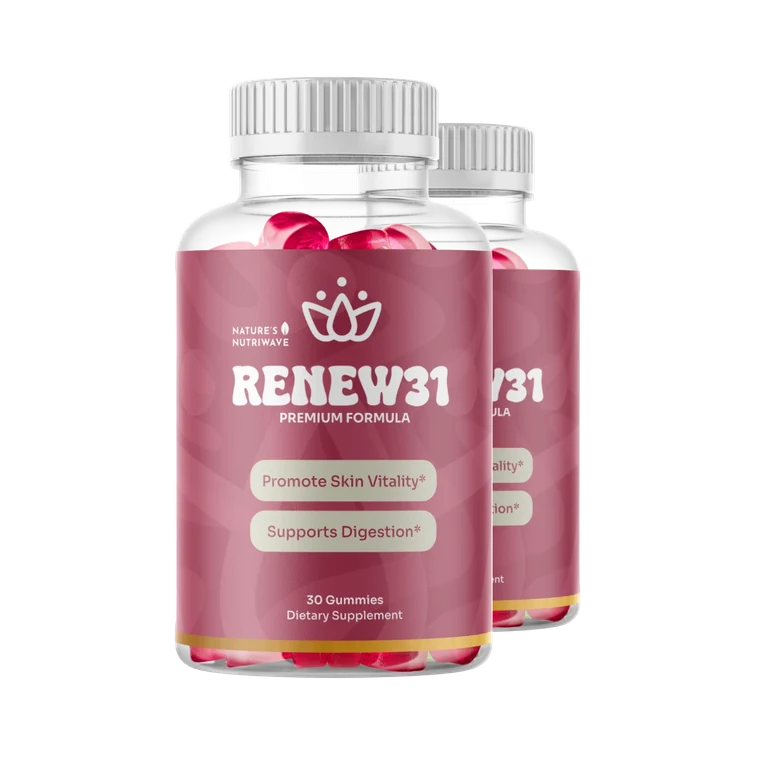
The same offer every time this card appears. The pack’s own note beside its figures is to confirm them at the live checkout before you pay.
0 trials of this formula published anywhere
This website is information. It is not medical advice, not a consultation, and reading it creates no relationship between you and any clinician — least of all with this desk.
Nothing here diagnoses, treats, cures or prevents anything, and the bottle makes no such claim either. That is the category rather than modesty. No trial of this formula, at these amounts, has been published anywhere a reader can check — and on this label the amounts largely do not exist to test, for the reason set out two sections below.
1 medical reviewer, named at the foot of every page
These pages are medically reviewed by Dr. Savita Srivastava, MD, for accuracy against the label and the cited sources. This is general information, not personal medical advice.
The medical review byline at the foot of every page names the reviewer. The block reads Dr. Savita Srivastava, MD, Physician, in the role Medical reviewer, reviewed on October 13, 2026. The review checks the product copy, the bottle, the ingredients and every page on this site against the printed label and the cited sources.
Money is not left out here: three per-bottle prices, three pack totals, three struck-through figures and a sixty-day window were all supplied, and all of them are printed. The review does not make this site a clinic: it is information, not a consultation, and your own clinician is still the right person to ask about your own situation.
430 milligrams declared for nine ingredients, lawfully
Declaring only the total is permitted by 21 CFR 101.36(c)(3). The ordering is the only quantitative inference the panel allows, and this site stops there.
The regulation that governs the rest of the label is 21 CFR 101.36(c), and the first thing it does is permit what this panel has done. Subsection (c)(3), word for word: “The quantitative amount by weight specified for the proprietary blend shall be the total weight of all other dietary ingredients contained in the proprietary blend”. One total, and nothing required for the members. Declaring only 430 mg is lawful and this site says so before it says anything else. Subsection (c)(2) is the one that gives a reader something: blend members “shall be declared in descending order of predominance by weight, in a column or linear fashion, and indented under the term “Proprietary Blend” or other appropriately descriptive term or fanciful name”. So the order is an assertion about weight, and it is the only quantitative statement this panel makes about any individual member. Rule and fact, side by side, and this desk stops there. No finding has been made about this product by FDA or by anybody else, no enforcement action or warning letter was supplied, and none is implied.
0 violations asserted anywhere on this site
Read that paragraph for what it does not say. The blend page is where the whole of it is set out, and the standards page explains why this site stops where it stops.
8 of the nine amounts nobody outside the maker knows
On eight of the nine blend members the honest answer is that nobody outside the manufacturer knows: the amount is somewhere between a trace and 430 mg, and the only thing the panel asserts about any individual member is its position in the order.
What the 430 mg does mean for a reader of this page is practical rather than legal. A clinician asked about an interaction will reasonably want to know how much.
So take the bottle itself to the conversation rather than a list copied off a website, and let the person you are asking read the panel and the caution.
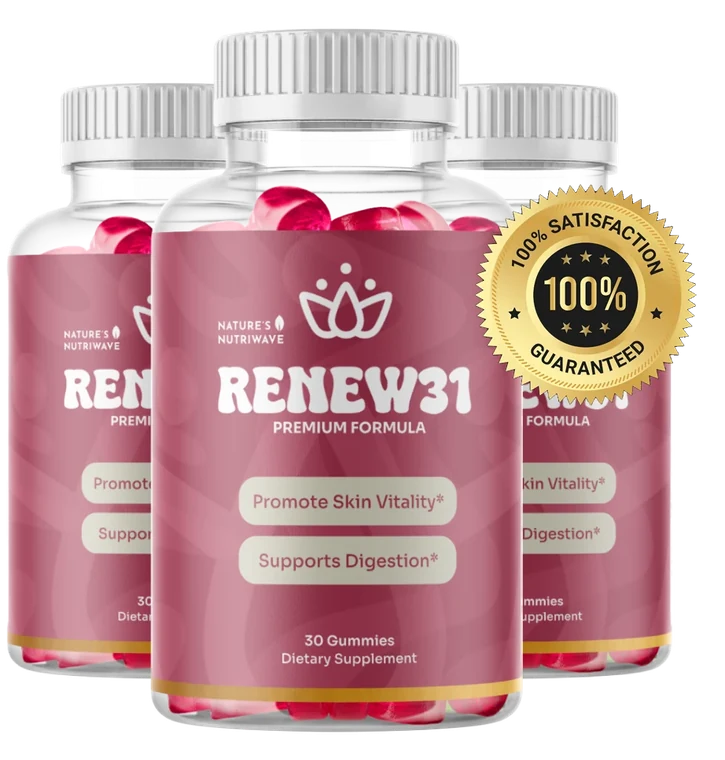
The same offer every time this card appears. The pack’s own note beside its figures is to confirm them at the live checkout before you pay.
2 federal facts that have to be printed together
Two of the ten ingredients need their own sections on a disclaimer page, and this is the one that needs the most careful writing on the whole site.
1 federal document mentions the powder
“Psoralen (sor’ a len) is a natural furocoumarin found in the seeds of Psoralea corylifolia”
“Powdered extracts of P. corylifolia have been linked to several instances of jaundice.”
“Likelihood score: C (probable rare cause of clinically apparent liver injury)”
There is no federal consumer page under “babchi”, “bakuchiol” or “Psoralea corylifolia” — a reader who searches those three words at NIH ODS, NCCIH or MedlinePlus finds nothing. The plant appears in the federal record in one place, inside a monograph nobody shopping for a skin gummy would think to look for.
6 to 8 weeks, the typical latency LiverTox records
“The time to onset has ranged from 1 to 5 months, the typical latency being 6 to 8 weeks.”
“The typical pattern of injury is hepatocellular.”
“Several instances of rapid recurrence of injury with rechallenge have been reported and rechallenge should be avoided.”
Three more sentences from the same monograph, because they are the ones a clinician will want. LiverTox is also explicit that “The mechanism of possible liver injury due to psoralen is unknown.”
02 The position, stated once and plainly
What this site does not say. It does not say this product is dangerous. It does not predict harm to any reader. And it does not tell anybody who is already taking it to stop. It says what the federal record holds and it tells you to put it to a clinician — and that goes double if you take any medicine or have, or have had, any liver condition.
It is also true, and reported, that no FDA action naming babchi, bakuchiol or Psoralea corylifolia was found. That is an absence rather than a clearance, and FDA says of itself that “The FDA does not generally review dietary supplements before they are sold to consumers.”
2 of the nine carry a sun-exposure line
“Upon exposure to ultraviolet (UV) light, psoralen forms cross links between DNA causing cell injury and death.”
“Avoid excessive sunlight or ultraviolet light exposure while using this herbal.”
One small point about timing belongs beside this, because it comes from two different ingredients at once. This product is taken about thirty minutes before a morning or afternoon meal, which puts both doses in daylight for most readers.
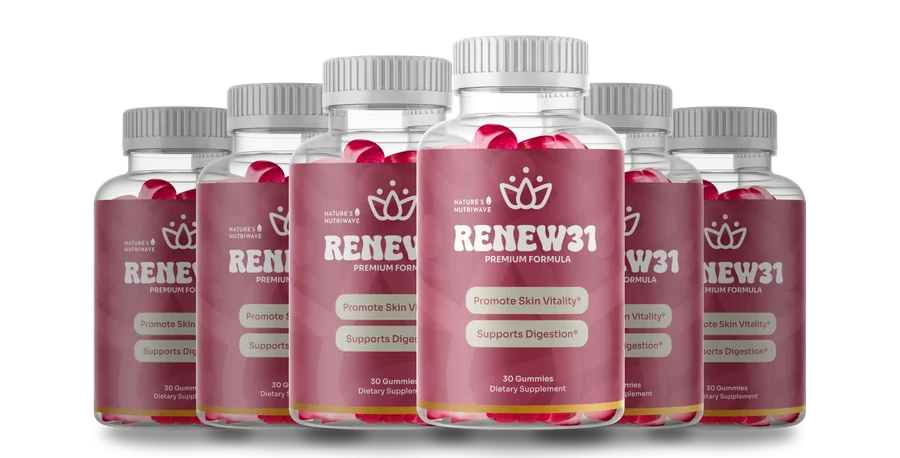
The same offer every time this card appears. The pack’s own note beside its figures is to confirm them at the live checkout before you pay.
0.5 billion CFU, against a range that starts at 1 billion
ODS describes the usual range in one sentence, and this gummy sits below the bottom of it. The second ingredient that needs its own section is the only one on this panel with a number beside it, and the number is the point.
“Many probiotic supplements contain 1 to 10 billion CFU per dose, but some products contain 50 billion CFU or more.”
2 billion CFU a day, in both of them
| Where | What was used | In whom | For how long |
|---|---|---|---|
| Published trial | 2 billion CFU a day, named strain | 136 adults with IBS | 8 weeks |
| Published trial | 2 billion CFU a day, named strain | 70 adults with functional bloating | 4 weeks |
| This bottle | 500 Million CFU, no strain named | — | — |
Four times what is here, in both trials, and in named strains.
3 words name a probiotic, and this label prints two
“Probiotic microorganisms are named by their genus, species, and strain.”
“Different types of probiotics may have different effects.”
And the label names no strain, which is the part that closes the door. Genus and species are printed. The strain is not, so what is in this gummy cannot be matched to either of those trials.
3 sentences, and the first one cuts against this page
“Higher CFU counts alone do not necessarily mean that the product has greater health benefits.”
“It is worth noting that the number of CFUs in a probiotic can decline over time.”
“Because some of these supplements may not have been studied, any potential health effects they have may not be known.”
One sentence has to be printed beside all of that or the report is unfair, and it is the first of the three above. The low count is a fact worth reporting, and a bigger number would not have been a promise.
4 federal sentences, and two of them cut each way
This is a disclaimer page, so the cautions are printed in full — and so is the sentence that balances them.
“The risk of harmful effects from probiotics is greater in people with severe illnesses or compromised immune systems.”
“The FDA has reported that probiotics might cause infections or even life-threatening illness in preterm infants.”
NCCIH also says “Probiotics have an extensive history of apparently safe use, particularly in healthy people.” and ODS says “There are currently no formal recommendations for or against the use of probiotics in healthy people.”
3 packs, and no one-bottle option
| Pack | A bottle | In total | Struck through at | Which divides to |
|---|---|---|---|---|
| Two bottles | $79 | $158 | $358 | $179 |
| Three bottles | $69 | $207 | $537 | $179 |
| Six bottles | $49 | $294 | $1,074 | $179 |
There is no one-bottle pack. The pack’s own note beside those figures is to confirm them at the live checkout, and nothing here is a representation about what you will be charged.
179 dollars a bottle behind all three struck-through figures
358 ÷ 2, 537 ÷ 3 and 1074 ÷ 6 all come to 179. This site does not say that the figure is fictitious.
“not necessarily fictitious merely because no sales at the advertised price were made.”
So the question — whether $179 was ever a bona fide offering price — is printed, and the answer is left with the only party who holds it. The pricing page sets out the lines to read at that checkout, and in what order.
30 days in which both conditions hold at once
“60-day window from purchase. Sales also asks for at least 30 days of use. Confirm live checkout.”
Which leaves a thirty-day span in which both conditions hold. Nothing here is a promise about refunds, because the promise is the seller’s.
The guarantee page does the subtraction in full, and no shipping cost, carrier, transit window or international policy was supplied at all.
0 customer reviews published here
And no customer review is published here. No customer review is published on this site. A review block came with this product — a score, a written-review count, an order count, a recommendation rate, a star split, ten names and a photograph each — and nothing in it could be tied to an order. A review is published here when a purchase stands behind it, so the block stays where it came from and these pages carry no rating and no review card. That is a standard this desk applies to itself, not an accusation about anybody named in the block.
03 If something goes wrong
Stop taking it and keep the bottle, the cap and the label: the lot code ties a bottle to a batch, and on this product it reads R-26/MY-3391, with a certificate reference of R-3391-26-MY. No certificate document was supplied with either string.
Who can report it too. Take the bottle so they can read the panel rather than a summary of it.
What you took, how much, for how long, what happened, and the lot code. A report does not have to prove causation to be worth filing.
The order desk with the order ID, and — because three addresses are printed on this product — also the distributor’s email on the label. The bottle prints no telephone number at all.
Enforcement in this category is largely after the fact, which means the record an agency acts on is built out of reports like yours. No complaint address or reporting URL for FDA or the FTC was supplied to this desk, so neither is printed here rather than being reconstructed from memory; both agencies publish one. The order desk is +1 (302) 200-3480 and [email protected], and the bottle’s own email is [email protected].
2 agencies, and no reporting address was supplied
The actionable part is short and it has two halves. A problem with the product — a reaction, a bottle that does not match its label, a supplement sold as a treatment for a disease — is FDA’s. A problem with the selling — a charge you did not authorise, a subscription you did not agree to, a struck-through figure you think was never a real price — is the Federal Trade Commission’s, and it is the FTC whose Guides Against Deceptive Pricing are quoted on the pricing page of this site. No complaint address or reporting URL for either agency was supplied to this desk, so none is printed here; both publish one, and the FDA pages this site does cite are listed in the sources at the foot of the page. Whatever you report and wherever you report it, it goes better with the order ID and a screenshot in front of you — and the order desk on +1 (302) 200-3480 is the only number in the supplied material that can see an order at all.
04 The last word
“Some skin conditions may be signs of an underlying medical issue.”
A new or worsening symptom is a reason to be seen, not a reason to buy something. If you are already taking this product and something about the federal record above concerns you, nothing on this page tells you to stop; it tells you to ask, and to take the bottle with you.
And if anything on this page is wrong, write to [email protected] and it is corrected with the date showing.
Questions
No, and nothing is. FDA: “The FDA does not approve dietary supplements for any purpose.” and “The FDA does not generally review dietary supplements before they are sold to consumers.” The label prints the correct disclaimer under both front claims.
The label’s own caution, word for word: “If you are under a physician’s care or taking medication, consult your healthcare professional before using this product. If you are pregnant or nursing, or have a known medical condition, do not use without consulting a physician.” Add to that: anyone with a liver condition, because of the babchi; anyone on warfarin or anything for blood sugar, because of the fenugreek; and anyone with a severe illness or a compromised immune system, because of the probiotic.
The label says do not use without consulting a physician, and that is the answer. Two ingredients make it sharper. NCCIH states that fenugreek is not safe in pregnancy in amounts greater than those found in food. And the only federal page on the fennel in this blend is NIH LactMed, which exists because fennel is used as a galactagogue and which records liver observations in women taking it.
Nothing on this site tells anybody to stop taking anything. What it says is that the federal monograph on the swallowed form of this plant is about liver injury, that the amount in this gummy is not printed, and that the right next step is a clinician who can see the bottle. If you are already taking it, raise it at your next appointment.
Ask a clinician before you start. The reason is babchi powder, which is Psoralea corylifolia, second of nine in this blend. NIH LiverTox records “Powdered extracts of P. corylifolia have been linked to several instances of jaundice.”, gives it “Likelihood score: C (probable rare cause of clinically apparent liver injury)”, and notes “The typical pattern of injury is hepatocellular.” Nothing here predicts harm to you and nothing here tells you to stop anything. It says ask.
NCCIH answers this one in its own words: “If you’re considering a dietary supplement, remember that “natural” does not mean “safe.”” And: “Some dietary supplements may have side effects, and some may interact with medications or other dietary supplements.”
References
Next
What the federal pages warn about, ingredient by ingredient, and the rows with no federal page at all.
Read itThe four groups in the label’s caution, and the ingredient that makes the question sharper.
Read itNCCIH and NIH ODS on skin supplements and on probiotics, including the page that does not exist.
Read itThe order page is the seller’s at renew31.com, where the pack, the shipping line and the guarantee wording are binding. Thirty gummies a bottle, one a day, thirty days a bottle. Speak to a clinician first if you take any medicine, are pregnant or nursing, or have a known medical condition — and take the bottle with you. Order support +1 (302) 200-3480.
From $49 a bottle by pack size · 60-day window from purchase, and 30 days of use asked for · ships from inside the US · order support +1 (302) 200-3480
What this page was checked against
Every figure on this page is either printed on the label or derived from what is printed, with the derivation shown beside it. The medical review sits in the block alongside.
Medical review Dr. Savita Srivastava
Reviewed for accuracy against the label and the cited sources. General information, not personal medical advice. Who reviews these pages?