Official product information
How to Read a Supplement Label: The Method, Worked Through
Ten dietary ingredients, one printed amount and a 430 mg blend of nine, which makes this panel the right place to learn the harder method: find the blend line, say that it is lawful, read the ordering, and count what the sales page left out.
Quick answer
Read the serving size, then look for one figure sitting above an indented list of names. On this panel there is one: a 430 mg Proprietary Blend holding nine ingredients with no amounts, which is lawful under 21 CFR 101.36(c)(3). What you can infer comes from (c)(2), which requires descending order by weight, so chicory root inulin is the heaviest of the nine and dandelion leaf the lightest. Divide 430 by 9 for an average of 47.8 mg and then distrust it. Check whether the itemised figure, 500 Million CFU, can be matched to a trial — it cannot, because no strain is named. Then count the sales page’s five ingredients against the panel’s ten, and read the Other Ingredients line.
01 The surface the whole method rests on
A blend label hands you a ranking and keeps the arithmetic
Ten names, one amount, and a rule that makes the order mean something.
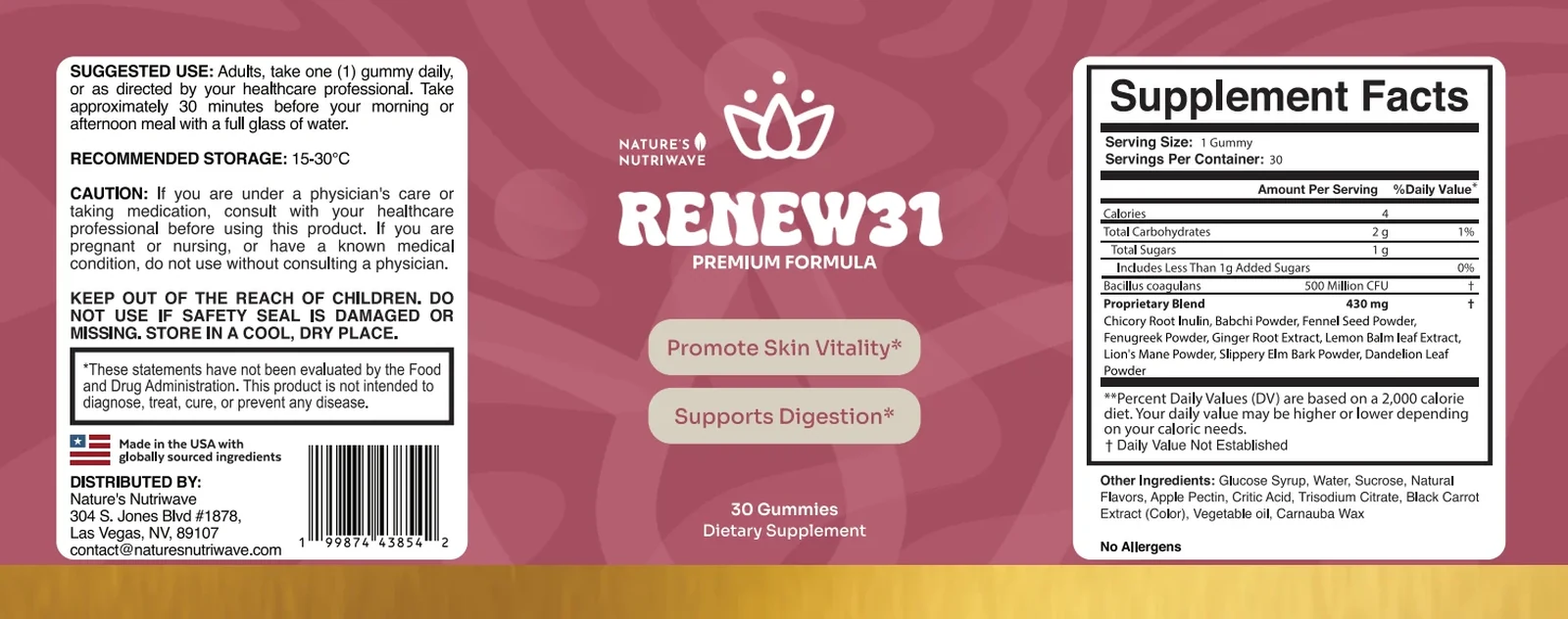
Most guides to reading a supplement label are written about the easy case, where every ingredient carries its own milligram figure and the whole job is arithmetic. This one is written about the harder and far commoner case, and that is what makes it worth learning here: a label a reader has to work at.
The panel prints ten dietary ingredients and exactly one amount. Bacillus coagulans is itemised at 500 Million CFU on its own row. Underneath it a single line reads Proprietary Blend 430 mg, with nine names indented below and nothing in the amount column beside any of them.
1 of 10 ingredients with an amount of its own
Four figures, then eight steps
That one blend total is lawful, it is the first thing this page says, and it is the reason the method that follows is about inference rather than division. None of it needs a laboratory, a background in chemistry or anything beyond the back of a bottle, one division and a willingness to read an ordering as a ranking.
3 steps of reading, before any arithmetic
Steps one to three: the reading
The serving size, the blend line, and the sentence to say out loud before anything else.
Read the serving size first, not the amounts
Every figure below it is per serving, so a panel read without it is a panel read wrong. This one prints Serving Size 1 Gummy and Servings Per Container 30, and the bottle holds thirty gummies. Three figures that agree with each other, which is the first thing a careful label gets right.
Find the blend line before you read anything else
This is the step that decides what the rest of the method can do. Run your eye down the amount column and ask whether there is a figure beside every name, or one figure sitting above an indented group. Here there is one of each: Bacillus coagulans at 500 Million CFU on its own row, and then Proprietary Blend 430 mg with nine names underneath it and nothing in the amount column.
Say the lawful part out loud, before anything else
A blend total with no member amounts is what the regulation asks for, not a breach of it. 21 CFR 101.36(c)(3): the quantitative amount for the blend “shall be the total weight of all other dietary ingredients contained in the proprietary blend”. So the nine missing figures are permitted. A guide that skips this step teaches a reader to misread every blend label they ever meet, and it costs nothing to get right.
2 steps of arithmetic, and one of them is a trap
Steps four and five: the arithmetic
Read the order as a ranking, then divide the total and distrust the answer.
Read the order, because the regulation makes the order mean something
Blend members are not listed in a decorative sequence. 21 CFR 101.36(c)(2) requires them “declared in descending order of predominance by weight”, so the printed order is the label asserting a ranking about its own contents. Here that makes chicory root inulin the heaviest of the nine and dandelion leaf powder the lightest, with the other seven ranked between them exactly as printed. That is the only quantitative thing this panel says about any single member.
Divide the total by the number of names, then distrust the answer
The average is worth calculating and worth mistrusting in the same breath. 430 ÷ 9 = 47.8 mg. It is an average and not an amount, and the descending-order rule in the step above guarantees the nine are unequal, so 47.8 mg is a figure the label has already told you is nobody’s. What survives is a ceiling: each of the nine weighs no more than 430 mg, and all nine together weigh 430 mg.
3 steps of counting, and the last one answers most questions
Steps six to eight: the counting
Whether the itemised figure can be matched to a study, how many names the marketing left out, and what the Other Ingredients line is for.
Check whether an itemised figure can be matched to a study
An amount is only useful if you can find the thing it was measured on. This panel itemises 500 Million CFU, which is 0.5 billion, and ODS describes the usual supplement range as “1 to 10 billion CFU per dose”. But the row names a genus and a species and no strain, and ODS says probiotics “are named by their genus, species, and strain.” A CFU count without a strain cannot be matched to any published trial, however large the count is.
Count the names on the sales page against the names on the panel
This one takes two minutes and almost nobody does it. Write down every ingredient the marketing names, then count the names on the panel. Here the supplied sales material names five and the panel names ten, so five ingredients are in the gummy and in none of what you were sold — fennel seed, fenugreek, lemon balm leaf, slippery elm bark and dandelion leaf. Four of those five carry federal safety material, which is the reason the count matters rather than the reason it is interesting.
Read the Other Ingredients line, and know what it is for
It is not a second list of actives. It is the base, the gelling agent, the acid, the buffer, the colour and the coat — here glucose syrup, water, sucrose, natural flavors, apple pectin, “Critic Acid”, trisodium citrate, black carrot extract (Color), vegetable oil and carnauba wax — and it is where a vegetarian, sugar or allergy question is actually answered. Apple pectin rather than gelatin is the printed basis for the vegetarian mark, and the label prints “Critic Acid”, which this site reports exactly as printed and does not correct.
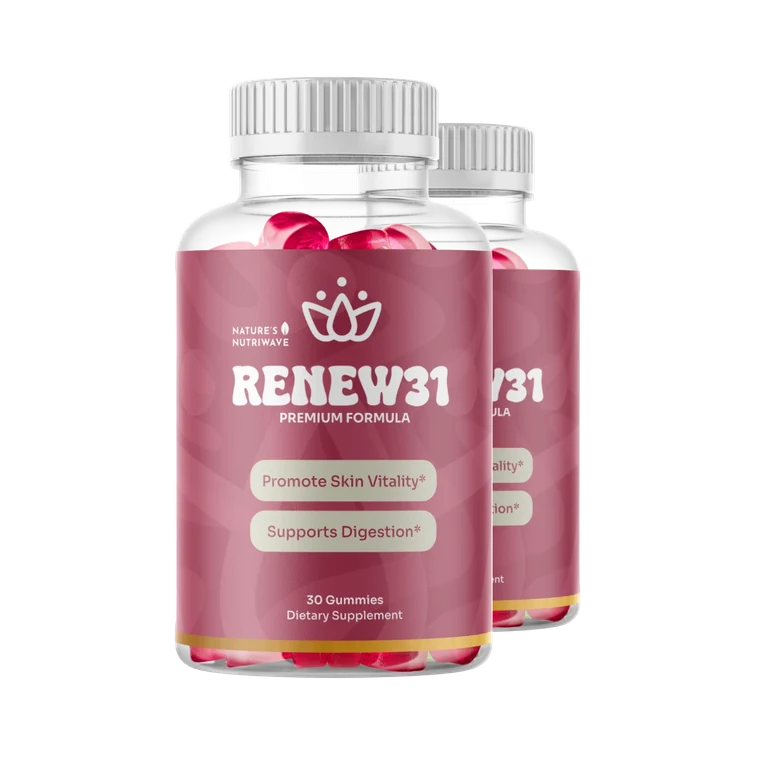
The smallest purchase is two bottles, which is sixty days
- 30 gummies a bottle, one a day, 30 days a bottle
- Two bottles $158, three $207, six $294
- A 60-day window from purchase, and 30 days of use asked for as well
- 430 mg declared for nine ingredients, and no amount for any one of them
The same offer every time this card appears. The pack’s own note beside its figures is to confirm them at the live checkout before you pay.
430 mg for nine ingredients, none of them itemised
Worked on a real panel
Nothing in the table is an estimate: the second column is quoted from the photograph and the third is what the ordering rule permits.
| Row | As printed | Amount per serving | What the panel asserts | What a reader can check |
|---|---|---|---|---|
| 1 | Bacillus coagulans | 500 Million CFU | Itemised, outside the blend | The only dietary-ingredient amount on the panel. 0.5 billion against a range ODS gives as 1 to 10 billion, and no strain is named, so it cannot be matched to a trial |
| 2 | Proprietary Blend | 430 mg | The total for all nine | Lawful under 21 CFR 101.36(c)(3). It is the whole of what the panel says about the weight of anything in the list below it |
| 3 | Chicory Root Inulin | No amount printed | 1st of nine — the heaviest | Studied at 12 g a day in 39 adults, which is about 28 times the whole blend. No federal consumer page exists for it at all |
| 4 | Babchi Powder | No amount printed | 2nd of nine | Psoralea corylifolia. No established oral amount. The famous human result is a 0.5% topical cream; the federal monograph is NIH LiverTox on psoralen |
| 5 | Fennel Seed Powder | No amount printed | 3rd of nine | Studied at 3 g a day in lactating women, about 7 times the whole blend. LactMed carries a sun-exposure caution |
| 6 | Fenugreek Powder | No amount printed | 4th of nine | 1 g a day at the bottom of the studied range is 2.3 times the whole blend. NCCIH carries a blood-sugar caution; LactMed a warfarin one |
| 7 | Ginger Root Extract | No amount printed | 5th of nine | Up to about 1,000 mg a day equivalent is 2.3 times the whole blend. Printed as an extract with no ratio beside it |
| 8 | Lemon Balm leaf Extract | No amount printed | 6th of nine | Studied amounts exist — 1 g and 3 g daily — but none of them for a skin or a digestive claim. Also an extract with no ratio |
| 9 | Lion’s Mane Powder | No amount printed | 7th of nine | 1 g as a single dose and 1.8 to 10 g a day in chronic use, so 2.3 times the whole blend and upwards |
| 10 | Slippery Elm Bark Powder | No amount printed | 8th of nine | No studied amount for Ulmus rubra was found. The 500 mg trials in the LiverTox bibliography used a different species |
| 11 | Dandelion Leaf Powder | No amount printed | 9th of nine — the lightest | No reliably established amount. NCCIH: “Very little research exists on this herb.” Listed last, so by the ordering rule the lightest of the nine |
Two rows carry a figure. Nine carry a position in a queue. The studied amounts in the last column are set against the 430 mg total, not against any individual row, because no individual row has an amount.
2 rows with a figure, and no Daily Value for either
Why both figures carry a dagger instead of a percentage
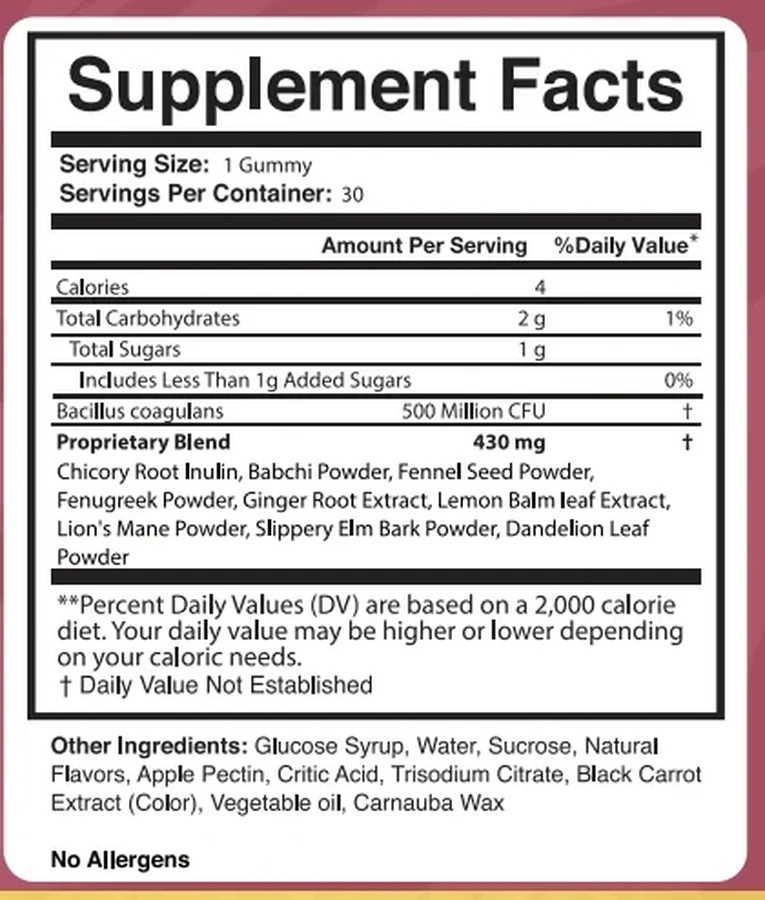
Both dietary-ingredient rows carry the footnote “† Daily Value Not Established” rather than a percentage, and that is accurate rather than evasive: no Daily Value has been established for a probiotic or for a proprietary blend, so there is no official reference amount for a percentage to be a percentage of.
The comparison on those rows has to come from the research instead, which is where the last column of the table comes from — and it is where the strongest arithmetic on this site lives, because every studied amount in that column is larger than the whole blend.
1 total, and no member figures at all
What the other format would have given you
| A panel that itemises every name | A panel that pools a blend | |
|---|---|---|
| What it prints | An amount beside every ingredient | One weight for a named mixture, and no weight for any member |
| What a comparison becomes | A division anybody can check: two-thirds, one half, one thirtieth | A ceiling. Every statement becomes no more than |
| What you can ask of one row | What it weighs, and how that sits against a studied amount | Only where it sits in an order, heaviest first |
| The consequence here | — | A trial at 12 g of inulin says nothing about a row that might be 300 mg and might be 3 mg, because both are consistent with everything the label prints |
| Is it lawful? | Yes | Yes — 21 CFR 101.36(c)(3) requires the total and nothing more |
The ten-second test on any panel: look for one figure above an indented list. If every name has an amount, the label has handed you the arithmetic. If there is a total above a group, it has handed you a ranking and kept the arithmetic.
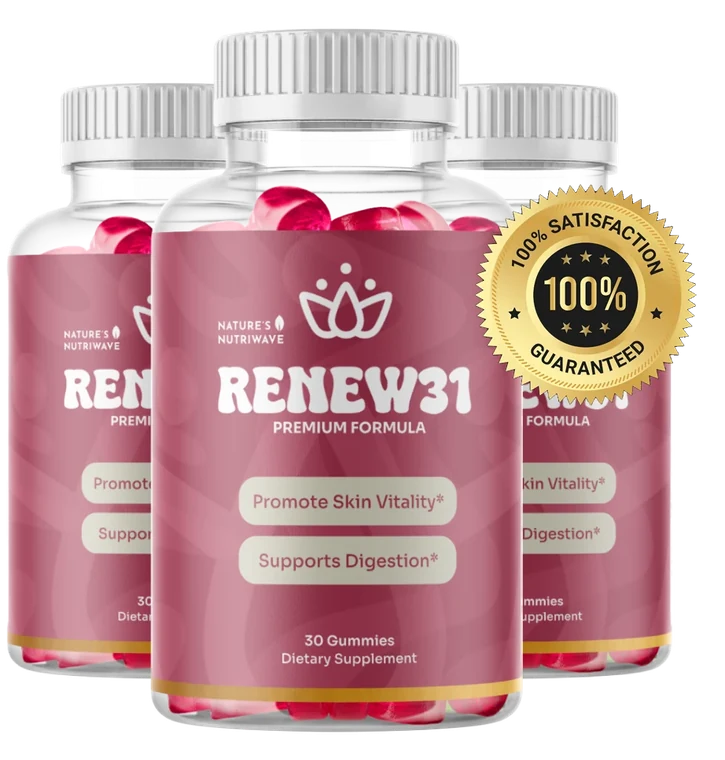
Three bottles is ninety days, at $69 a bottle
- 30 gummies a bottle, one a day, 30 days a bottle
- Two bottles $158, three $207, six $294
- A 60-day window from purchase, and 30 days of use asked for as well
- 430 mg declared for nine ingredients, and no amount for any one of them
The same offer every time this card appears. The pack’s own note beside its figures is to confirm them at the live checkout before you pay.
4 things that look like answers, and this is the first
Trap one: an average is not an amount
And the least useful. The descending-order rule at 21 CFR 101.36(c)(2) guarantees the nine are unequal, so the average is a figure the label has already told you belongs to none of them. Worth calculating once, to see the scale of the thing, and worth never quoting as a dose.
0 violations asserted anywhere on this site
Trap two: a missing member amount is not a violation
21 CFR 101.36(c)(3) requires the blend figure to be the total and nothing more. The nine missing amounts are permitted.
That is not a defence of the format — a reader still cannot check a single one of the nine against a single published study — but calling a lawful label unlawful is the fastest way for a consumer page to become worthless.
0.5 billion CFU, and no third word
Trap three: a CFU count without a strain cannot be matched to a trial
“Probiotic microorganisms are named by their genus, species, and strain.”
This label prints genus and species. Published Bacillus coagulans trials in gut symptoms used 2 billion CFU a day in named strains, and without a strain on the bottle there is nothing to line up.
ODS adds two things worth holding together: “Higher CFU counts alone do not necessarily mean that the product has greater health benefits.” and “It is worth noting that the number of CFUs in a probiotic can decline over time.” A bigger number would not have been a promise, and a printed number is a figure at the time of printing.
2 extracts on this panel, and neither carries a ratio
Trap four: an extract with no ratio is a second unknown on the first
One absence is worth naming because on a blend label it is where the real argument hides. No extract ratio, concentration or dry-weight equivalence is printed for any row on this panel. Two of the nine are printed as extracts — Ginger Root Extract and Lemon Balm leaf Extract — and neither carries a ratio, a standardisation figure or a marker compound. The other seven are printed as powders. On a label that gave each member its own milligram figure, a missing ratio would still leave you with a weight. Here there is no weight to qualify in the first place, so the missing ratio is the second unknown stacked on the first.
02 The comparison, and which way it runs
What to compare a blend total against
A studied amount beside a blend total is useful. A blend total alone is decoration.
An amount means nothing on its own. It means something beside a published figure for the same ingredient, and those figures are free. NIH’s Office of Dietary Supplements and NCCIH publish consumer fact sheets; the NIH LiverTox and LactMed monographs publish what the record holds on safety; a named clinical trial gives a studied amount and, crucially, a studied population.
Then compare in the direction that favours nobody. On this label the comparison is unkind in one place and simply unavailable in another. Unkind: Put the five comparable ingredients in one place, with the whole blend on the other side of each one. Chicory root inulin: 12 g a day studied, against a 430 mg blend — about 28 times the blend. Fennel seed powder: 3 g a day — about 7 times the blend. Lion’s mane: 1 g as a single dose and 1.8 to 10 g a day in chronic use — 2.3 times the blend and up. Fenugreek: 1 g a day at the bottom of the range — 2.3 times the blend. Ginger: up to about 1,000 mg a day equivalent — 2.3 times the blend. Twenty-eight times, seven times, and three ingredients at more than twice. And the blend is not 430 mg of any one of them: it is 430 mg of all nine together, and the four that are not on this list have no studied amount to put beside it.
1 document, and the seller already holds it
One question does more work than the whole method
Babchi, slippery elm, dandelion leaf and lemon balm have no established oral amount for any purpose on this label, so there is nothing published in either direction. That is a gap in the record rather than a finding about the plants.
Not the reference number — the certificate of analysis for this lot. It is the only thing that could put a figure against any of the nine, which makes it the most useful thing to ask the order desk for, in writing.
Two reference strings arrived with the pack: a lot code R-26/MY-3391 and a certificate-of-analysis reference R-3391-26-MY. No certificate document was supplied with either of them. A certificate reference is a filing number; the certificate is the thing that says what was in the batch and who measured it. On a label where nine ingredients carry no individual amount, that document is the only thing that could put a figure against any of the nine — which makes its absence the single most useful thing to ask the order desk for. Ask for the document itself, for this lot, in writing. The order desk is +1 (302) 200-3480 and [email protected], and what to ask it for is set out on the batch check page.
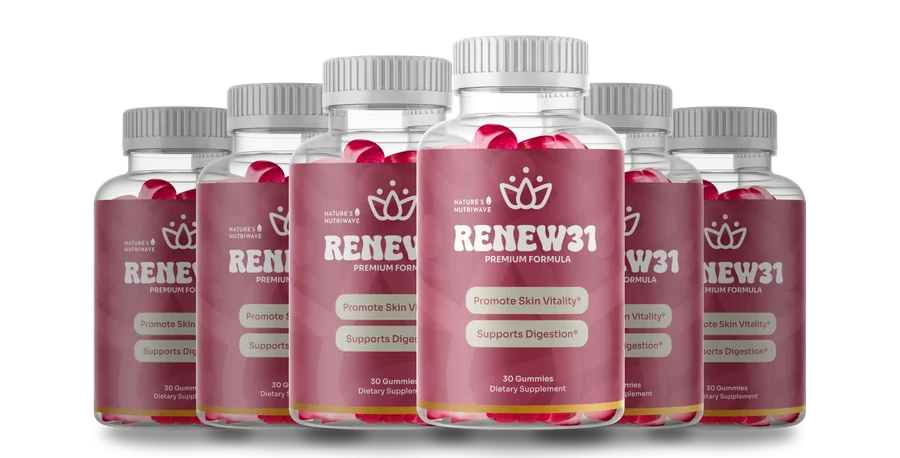
Six bottles is a hundred and eighty days at $49 a bottle
- 30 gummies a bottle, one a day, 30 days a bottle
- Two bottles $158, three $207, six $294
- A 60-day window from purchase, and 30 days of use asked for as well
- 430 mg declared for nine ingredients, and no amount for any one of them
The same offer every time this card appears. The pack’s own note beside its figures is to confirm them at the live checkout before you pay.
0 tests this method performs
The honest limit of all this
It reads a label. It does not test a product, and it never predicts an outcome.
What this procedure does
- Reads what is printed on a regulated surface, in about four minutes
- Says that one studied amount is a stated multiple of a blend total
- Says that nine ingredients share that total in an order the label asserts
- Counts the names the marketing left out, and finds four with federal safety material
- Produces a ceiling for every one of the nine: no more than 430 mg
What it cannot do
- Tell you what is actually in the gummy
- Tell you how the nine divide the 430 mg between them
- Turn a ratio into a prediction about anybody
- Replace a pharmacist, or a laboratory
- It can say an amount is far below what was studied. It can never say an amount is large enough to do anything.
No manufacturer, facility or GMP line is printed on this label and none was supplied. FDA says of itself that it “The FDA does not generally review dietary supplements before they are sold to consumers.” and that “Dietary supplement companies are responsible for ensuring that their products are safe and accurately labeled.”
6 things this label gets right
What this label does right, and the sentence to carry away
“Some skin conditions may be signs of an underlying medical issue.”
Nor is any of this advice about your body. If you take medicine, the panel goes to a pharmacist. And if the reason you are reading a label is a change in your skin rather than a purchase, the label is the wrong document.
What the method does do is stop a number on a bottle from doing work it has not earned — and it is worth closing on what this particular label does right, because a page that only attacks is not trustworthy either. It is also better than its own marketing, which told this desk that neither of its two printed figures was there.
Questions
Renew31 FAQ: reading a label questions
Does Renew31 have a proprietary blend?
Yes. Nine of the ten dietary ingredients are inside it and it is declared at 430 mg with no amount for any member. Only the Bacillus coagulans sits outside it and carries its own figure.
What does the 430 mg on Renew31 mean?
It is the total weight of all nine blend members together, which is what 21 CFR 101.36(c)(3) requires. It is not the amount of any one of them. Each of the nine weighs no more than 430 mg; all nine together weigh 430 mg; and 430 divided by 9 is 47.8 mg, which is an average nobody printed and which the ordering rule guarantees is nobody’s actual amount.
What amount of each ingredient is in a Renew31 gummy?
One figure exists and nine do not. The Bacillus coagulans is printed at 500 Million CFU. The nine blend members carry no individual amounts at all. What the panel does tell you is the order: 21 CFR 101.36(c)(2) requires descending order of predominance by weight, so chicory root inulin is the heaviest of the nine and dandelion leaf powder is the lightest.
What strain of Bacillus coagulans is in Renew31?
None is named. ODS: “Probiotic microorganisms are named by their genus, species, and strain.” This label prints the genus and the species and stops. NCCIH: “Different types of probiotics may have different effects.” So what is in this gummy cannot be matched to any published trial, whatever the count.
What are the other ingredients in Renew31?
As printed: “Glucose Syrup, Water, Sucrose, Natural Flavors, Apple Pectin, Critic Acid, Trisodium Citrate, Black Carrot Extract (Color), Vegetable oil, Carnauba Wax”. Note the fifth-from-last: the label prints “Critic Acid”, where citric acid is almost certainly meant. This site reports what is printed and does not call it a violation.
Why does the Renew31 label say Critic Acid?
Nobody supplied an answer, so the honest report is that it is a typesetting slip on a common food acid. Citric acid is almost certainly what is meant. It is reported once because it is the one place on this panel where a reader can judge how closely the artwork was proofed — alongside the mismatched footnote symbols and the missing s on “Promote Skin Vitality*”.
References
Sources for this page
- Electronic Code of Federal Regulations. 21 CFR 101.36 — Nutrition labeling of dietary supplements. www.ecfr.gov. Accessed October 12, 2026.
- NIH Office of Dietary Supplements. Probiotics — Consumer. ods.od.nih.gov. Accessed October 12, 2026.
- National Center for Complementary and Integrative Health. Probiotics: What You Need To Know. www.nccih.nih.gov. Accessed October 12, 2026.
- National Center for Complementary and Integrative Health. Dandelion. www.nccih.nih.gov. Accessed October 12, 2026.
- NIH LiverTox, National Institute of Diabetes and Digestive and Kidney Diseases. Psoralen. www.ncbi.nlm.nih.gov. Accessed October 12, 2026.
- U.S. Food and Drug Administration. Dietary fibre labelling guidance, June 2018. www.fda.gov. Accessed October 12, 2026.
- U.S. Food and Drug Administration. Facts About Dietary Supplements. www.fda.gov. Accessed October 12, 2026.
Next
Keep reading
This panel, line by line
Every printed line transcribed, with the footnotes, the caution and the storage range.
Read itNine names, one number
Why there is no amount for any of the nine, and what that still lets you say.
Read itAll ten ingredients
A dossier each, with whatever federal page exists and whatever does not.
Read itOrder Renew31 from the official page
30 gummies a bottle, two a day, thirty days a bottle. Ten ingredients, ten printed amounts, no proprietary blend, and about 430 mg of declared actives a serving. Price and guarantee are read from the live checkout. Order support +1 (302) 200-3480.
From $49 a bottle by pack size · 60-day window from purchase, and 30 days of use asked for · ships from inside the US · order support +1 (302) 200-3480