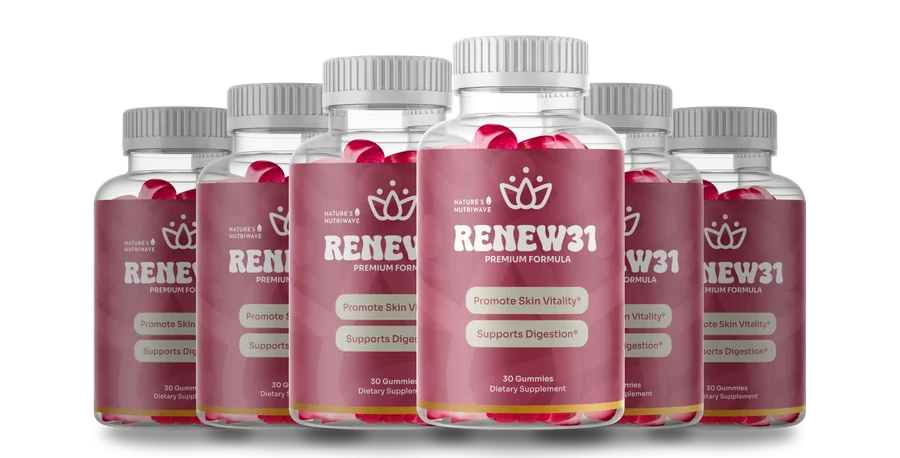
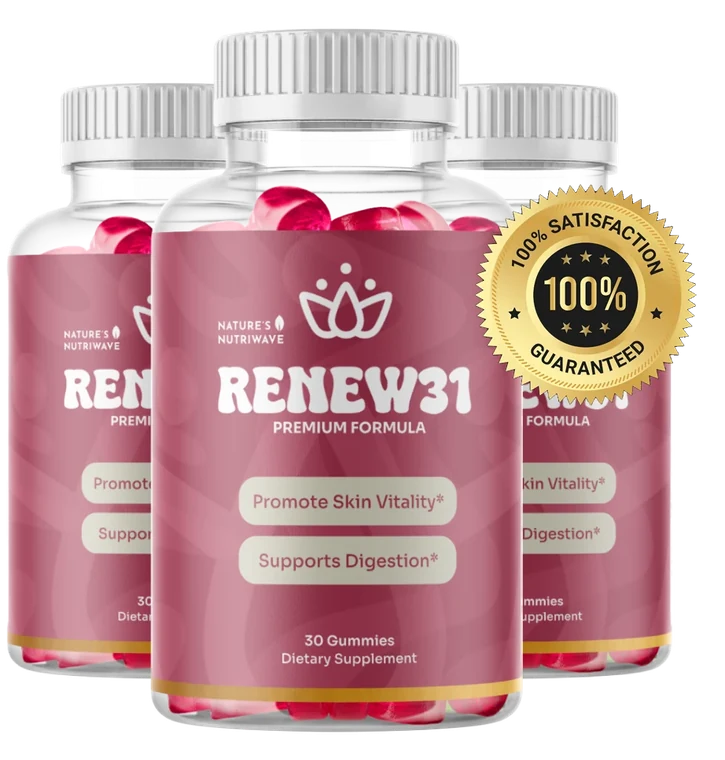
Authorized U.S. store — Renew31 30 gummies · one a day · 30 days 430 mg across nine · none itemised 500 Million CFU · no strain named Read the panel

Official product information

Editorial Standards: The Six Rules Every Page Here Follows

The six rules every page here is written to, why a regulation goes beside a printed fact, and what this site will not publish at all.

Quick answer

Every page on Myrenew31 is written from the photographed bottle first, the seller’s supplied pack second and federal consumer pages third, with quotations stored as exact strings and printed unchanged. Declaring only a blend total is lawful and this site says so before it says anything else about the 430 mg. It never writes that a label is illegal or predicts enforcement. It publishes no customer review, no rating and no AggregateRating markup, and every page is medically reviewed by Dr. Savita Srivastava, MD, for accuracy against the label and the cited sources. This is general information, not personal medical advice.

01 Why these are in writing

Six rules, published so they can be held against these pages

A commercial relationship is the reason to publish a standard, not a reason to skip one.

The bottle winsWhere the label and the pack disagree, the label is the product.
The rule goes firstThe regulation is printed before the fact it governs.
A bound is not an amountNo individual blend figure is estimated, derived or implied.
Quotations are exact stringsStored unchanged, printed unchanged, attributed to a named source.
Credit travels with the criticismIn the same voice, on the same page, not quarantined at the bottom.
Nothing that manufactures a personNo customer, no face and no name from anyone who never read the work.

These are the rules every page on this site is written to, in one line each. They are published rather than implied for one reason: a link from this site to the seller’s checkout may earn a commission, and a site with a financial interest in a click has to be checkable or it is an advertisement with footnotes.

All six are testable against the pages themselves. If a page here breaks one of them, that is a defect worth writing in about, and [email protected] is the address for it, Mon–Fri 9:00am–5:00pm ET.

3 rules about where a fact comes from

The first three rules, in full

The bottle wins. The rule comes first. And a bound is a bound rather than an amount.

The bottle wins

Where the photographed label and the supplied pack disagree, the label is reported as what the product is and the pack is reported as what the product is sold as. Both are shown; neither is quietly dropped. On this product the rule fires in the bottle’s favour: the pack says no CFU figure and no milligrams are printed, and the panel prints 500 Million CFU and a 430 mg blend total.

The rule goes beside the fact, and the rule comes first

Nine of the ten dietary ingredients on this panel carry no amount of their own, and that is lawful: 21 CFR 101.36(c)(3) requires only the total weight of the blend. This site says so before it says anything else about the blend. It never writes that a label is illegal, misbranded or in violation of anything, and it never predicts enforcement. It sets the regulation and the printed fact side by side and stops.

A bound is a bound and an average is an average

Because the regulation requires descending order by weight, the panel supports exactly three statements about the nine: each weighs no more than 430 mg, all nine together weigh 430 mg, and the first is the heaviest while the last is the lightest. 430 divided by 9 is 47.8 mg, and that figure appears on these pages labelled as an average that nobody printed and that the ordering rule guarantees is not any member’s amount.

3 rules about how a fact is handled

The second three rules, in full

Quotations are exact strings. Credit travels with the criticism. And nothing on this site manufactures a person.

Quotations are exact strings

Every quotation on this site comes from a named published source, is stored as an exact string and is printed inside quotation marks unchanged. Nothing is paraphrased into quotation marks and nothing is reassembled from fragments. Where a federal source is ungrammatical, it is reproduced ungrammatically, and where the label misspells a food acid, the misspelling is printed.

Credit travels with the criticism

The rule applies in both directions. This label prints a blend total, prints a CFU figure, carries a complete caution, names its distributor with a street address and an email, and prints the FDA disclaimer under both front claims. The seller’s own star split agrees with the seller’s own average. All of that is printed in the same voice as the findings against the product and on the same pages, rather than quarantined into a box at the bottom.

Nothing that manufactures a person, and no claim the bottle did not make

No customer quotation, no star rating presented as a rating, no AggregateRating or Review markup in the structured data, no photograph presented as a customer, and a reviewer’s name only on pages the reviewer has read. This site never writes that the product treats, relieves, eases, cures, improves or helps anything, and never makes the product the grammatical subject of a disease sentence. A link from this site to the sales page may earn a commission, which is exactly why these rules are written down and dated.

From $49 a bottleThirty gummies, one a day, thirty days a bottle. Two bottles is the smallest pack offered, and it is exactly as long as the refund window.
Order Renew31

430 milligrams declared for nine ingredients, lawfully

Why the rule goes before the fact

“The quantitative amount by weight specified for the proprietary blend shall be the total weight of all other dietary ingredients contained in the proprietary blend”

21 CFR 101.36(c)(3), Nutrition labeling of dietary supplements

Nine of the ten dietary ingredients on this panel carry no amount of their own. That reads like a failing until you read the regulation, so this site prints the regulation first. One total, and nothing required for the members. Declaring only 430 mg is lawful.

Subsection (c)(2) is the one that gives a reader something: “Dietary ingredients contained in the proprietary blend that are listed under paragraph (b)(3) of this section (i.e., “other dietary ingredients”) shall be declared in descending order of predominance by weight, in a column or linear fashion, and indented under the term “Proprietary Blend” or other appropriately descriptive term or fanciful name.” So the ordering is an assertion about weight, and it is the only quantitative statement the panel makes about any individual member.

3 inferences the ordering rule allows

Three statements the panel supports, and nothing beyond them

The one figure the label has already told you is wrong47.8 mg

430 divided by 9. Wherever that figure appears on this site it is labelled as an average nobody printed, and the descending-order rule guarantees it is not any single member’s amount. No individual amount is estimated, derived or implied anywhere here.

Each weighs no more than 430 mgA bound, which is the only ceiling the panel supports.
All nine together weigh 430 mgThe total, which is the one figure the panel declares.
Inulin is heaviest, dandelion leaf lightestBecause the label asserts a descending order by weight.
Nothing else is supportedNot a share, not a ratio, not a per-ingredient figure.
And no violation is assertedThis site never writes that a label is illegal or misbranded.
Nor is enforcement predictedNo finding has been made about this product by anybody.

0 violations asserted anywhere on this site

What this site never writes

Rule and fact, side by side, and this desk stops there. This site never writes that a label is illegal, misbranded or in violation of anything, and never predicts enforcement. No finding has been made about this product by FDA or anybody else, no warning letter or enforcement action was supplied, and none is implied by anything here.

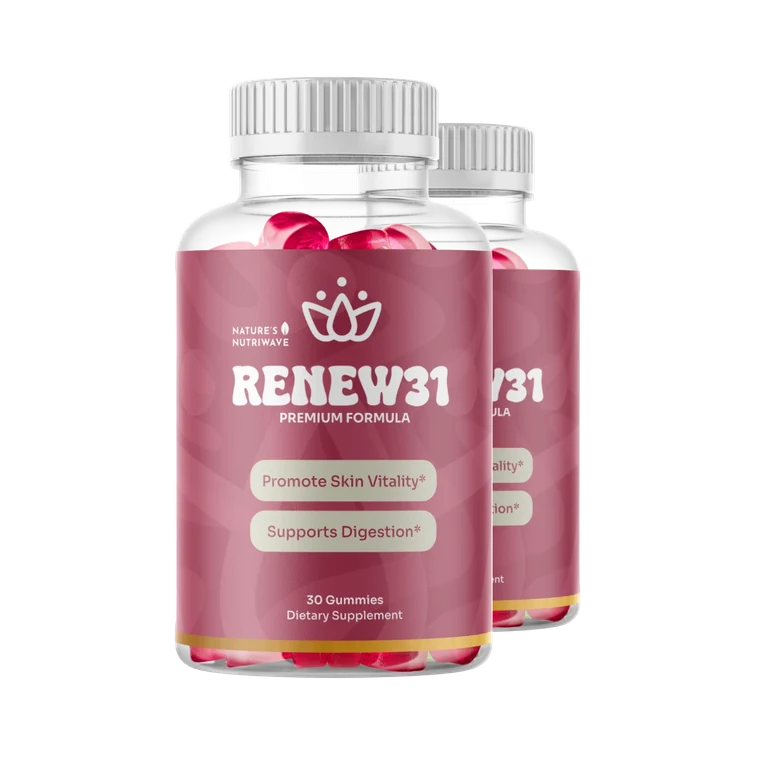
The two-bottle pack of Renew31, as the checkout shows it

Every figure on these pages came off a surface you can check

  • 30 gummies a bottle, one a day, 30 days a bottle
  • Two bottles $158, three $207, six $294
  • A 60-day window from purchase, and 30 days of use asked for as well
  • No customer review and no rating is published on this site

The same offer every time this card appears. The pack’s own note beside its figures is to confirm them at the live checkout before you pay.

02 Exact strings, and nothing tidied

A quotation is an exact string, including its mistakes

“Slippery elm has been linked to rare instances cutaneous allergic symptoms.”

NIH LiverTox on slippery elm, reproduced with the word that is missing from the source

A quotation on this site is an exact string. It is stored as one, printed inside quotation marks unchanged, and attributed to a named source that was opened and read on October 12, 2026. Nothing is paraphrased into quotation marks and nothing is reassembled from fragments of two sentences.

Where a federal source is ungrammatical, it is reproduced ungrammatically, as above, because tidying a source is editing it.

1 misprint, reported once and not corrected

Where the label misspells a food acid, the misspelling is printed

“Critic Acid”

The other-ingredients line on this bottle, printed as the label prints it

Citric acid is almost certainly what is meant. This site reports what is printed, does not silently correct it, and does not call it a violation. Where a source’s own punctuation is odd, that survives too.

The same rule is why the front claim is reported as Promote Skin Vitality rather than Promotes, once, as a proofing slip.

3 tiers, in that order

How a source is chosen

Federal consumer pages first

NCCIH, NIH ODS and MedlinePlus, because they are written for the person buying the bottle rather than for a clinician.

Then the NIH monograph series

LiverTox and LactMed, which is where most of the record on these nine botanicals actually lives.

Then the regulation itself

At the eCFR. And where a published trial is cited it is named with its journal, its size and its duration, because a trial without those three is an appeal to authority rather than a citation.

6 of these ten ingredients lost a consumer layer in July 2025

Why so many rows here read “no federal consumer page”

One piece of context explains why so many rows on these pages read no federal consumer page, and it is recent. MedlinePlus prints this at the top of what used to be its herbs and supplements section: “As of July 29, 2025, the herbs and supplements information from the Therapeutic Research Center (TRC) Natural Medicines Comprehensive Database is unavailable.” For six of these ten ingredients, the federal consumer layer that existed until July 2025 is gone. That is not the seller’s fault and it is not a criticism of the product. It is the reason a reader who goes looking for babchi or chicory inulin or slippery elm on a government site in 2026 will find less than they would have found in 2024, and it is why the LiverTox and LactMed monographs do so much of the work on these pages.

The six-bottle pack of Renew31, as the checkout shows it

Six bottles is a hundred and eighty days at $49 a bottle

  • 30 gummies a bottle, one a day, 30 days a bottle
  • Two bottles $158, three $207, six $294
  • A 60-day window from purchase, and 30 days of use asked for as well
  • No customer review and no rating is published on this site

The same offer every time this card appears. The pack’s own note beside its figures is to confirm them at the live checkout before you pay.

2 figures the pack says are absent, and both are printed

Disagreement one: the bottle against the pack

The pack says the Bacillus coagulans is “named on the sales page; no CFU printed” and that four of the botanicals are each “named on the sales page; no milligrams printed” The panel prints 500 Million CFU and a 430 mg blend total. The bottle wins, and the disagreement is reported as a finding about the pack. The about page sets it out in a table.

2 federal sources, and neither is dropped

Disagreement two: two NIH sources against each other

Two arms of NIH describing the same ingredient, both printed and both attributed.
SourceWhat it says about fenugreek and the liver
NIH LactMed“Liver toxicity has been reported, both taken alone and in herbal combinations that included fenugreek.”
NIH LiverTox“Fenugreek has not been implicated in causing liver injury.” with “Likelihood score: E (unlikely cause of clinically apparent liver injury).”

Both are printed, both are attributed, and this desk does not pick one. A reader who is taking anything for the liver should know that two arms of NIH describe the same ingredient differently, and a page that quietly chose the reassuring one would be hiding the useful part.

1 federal figure this site declines to repeat

Disagreement three: a federal source against itself

There is one place where this site declines to quote a federal page at all, and it is worth stating because silence is a decision too. LiverTox’s dose line for lion’s mane is irreconcilable with the gram-scale doses in its own bibliography — it is almost certainly a units error in the source.

This site says nothing about it rather than repeating a figure it has reason to think is wrong, and the studied amounts quoted on these pages come from the trials themselves, each named with its size and duration.

3 live disagreements on this product, all three printed in full

How a disagreement is reported rather than resolved

What a disagreement is notAn accusation. Two surfaces printing different things is a fact about the surfaces.
What gets droppedNothing. Both sides of every disagreement here are printed, with the source named.
Who decidesNobody here. The ordering rule decides between the bottle and the pack.
Where a figure is withheldWhere nobody printed one: the shipping cost, the carrier, the transit window, the certificate document and any individual blend amount.
The three-bottle pack of Renew31, as the checkout shows it

Two bottles, three or six, at the price the pack supplied

  • 30 gummies a bottle, one a day, 30 days a bottle
  • Two bottles $158, three $207, six $294
  • A 60-day window from purchase, and 30 days of use asked for as well
  • No customer review and no rating is published on this site

The same offer every time this card appears. The pack’s own note beside its figures is to confirm them at the live checkout before you pay.

6 refusals, and the last one governs every sentence here

What this site will not publish at all

This is the list that matters most, because it is the list of things this site had and chose not to print.

No customer quotationTen arrived with this product. Not a sentence of any of them is printed.
No star rating as a ratingThe seller’s split appears once, as the evidence the check is run on.
No rating markup anywhereNo AggregateRating and no Review node on any page here.
No photograph presented as a customerTen images, once, small, with one attribution line and nothing else.
A reviewer’s name only on pages the reviewer has readDr. Savita Srivastava, MD, reviews the pages for accuracy against the label and the cited sources.
No claim the bottle did not makeThis site never writes that the product treats, relieves, eases, cures, improves or helps anything.

1 medical reviewer, and every supplied figure printed

How the medical review works

This is the rule that cost the most and it is the one to explain carefully. Every page is medically reviewed by Dr. Savita Srivastava, MD, Physician, for accuracy against the label and the cited sources. The review covers the product copy, the bottle and the ingredients, and the reviewer’s name, credential, role and review date are printed in the medical review block at the foot of every page.

A reviewer’s name goes only under pages the reviewer has read, because a real clinician’s name under work they have not read is a fabricated endorsement — which harms the clinician as much as it misleads the reader. The review is limited to the label and the cited sources, and it is general information, not personal medical advice.

The medical review block reads: Dr. Savita Srivastava, MD, Physician, Medical reviewer, October 13, 2026.
The rule in one sentence. This site will not print a person who did not say what it would have them say — not a customer behind a quotation, not a face behind a rating, and not a clinician behind a page she has never read.

6 figures printed, and six printed as absences

Every supplied figure printed, every missing one reported as missing

Money figures that were supplied, and are printed

  • Three per-bottle prices: $79, $69 and $49
  • Three pack totals: $158, $207 and $294
  • Three struck-through figures, and the division behind all three
  • A 60-day window from purchase, and a 30-day use condition
  • The refund timing: 3–5 business days after they credit it, then a further 5–10 days on the card
  • Who pays the return postage: paid by the buyer, tracked service advised

Money figures nobody supplied, printed as absences

  • The shipping cost — no figure, no threshold, no free-shipping condition
  • The carrier
  • The transit window
  • Any international policy
  • The name of the payment processor, so the billing descriptor is new information at the checkout
  • Any pricing history behind the struck-through figure

Nothing about money is left out. The prices and the guarantee were supplied, and every one of them is printed.

179 dollars a bottle, and no conclusion drawn from it

An arithmetic finding is not a verdict

And an arithmetic finding is not a verdict. The three struck-through figures on this product divide to $179 a bottle in all three cases, and that division is printed on the pricing page with FTC’s Guides Against Deceptive Pricing quoted beside it.

This site does not say the $179 is fictitious. 16 CFR 233.1(b) is explicit that a former price is “not necessarily fictitious merely because no sales at the advertised price were made.” So the arithmetic is published, the rule is published, and the question is left where it belongs: with the seller, who is the only party holding the pricing history that would answer it.

7 checks you can run on this site yourself

Seven of these rules can be checked in the page source

A standard nobody can test is a slogan. Nothing is stored and nothing leaves this page.

0 of 7 checkable on these pages

A correction is the fastest way to improve a page here. Write to [email protected], Mon–Fri 9:00am–5:00pm ET, naming the page and the line. A figure that is wrong is changed and the date at the foot of the page changes with it; nothing here is edited silently. That address cannot help with an order — the order desk on +1 (302) 200-3480 is the only surface in the supplied material that can see one.

From $49 a bottleThirty gummies, one a day, thirty days a bottle. Two bottles is the smallest pack offered, and it is exactly as long as the refund window.
Order Renew31

Questions

Renew31 FAQ: editorial standards questions

Why does this site criticise the label and credit it on the same page?

Because both are true and a page that only attacks is not trustworthy either. This label prints a blend total, prints a CFU figure, carries a complete caution, names its distributor with a street address and an email, and prints the FDA disclaimer under both front claims. Those are credits and they appear in the same voice as the findings against the product.

Is the proprietary blend on Renew31 legal?

Yes. 21 CFR 101.36(c)(3) requires the quantitative amount for a blend to be “the total weight of all other dietary ingredients contained in the proprietary blend”, and that is what 430 mg is. Declaring only the total is lawful and this site says so plainly. The criticism on these pages is not that a rule was broken; it is that the rule leaves a reader unable to check anything.

Why does the pack say no CFU is printed when the bottle prints one?

That is a finding about the pack, and it is the one place the bottle comes out ahead of its own marketing. The supplied pack says of Bacillus coagulans “named on the sales page; no CFU printed” and of four other ingredients “named on the sales page; no milligrams printed”. The panel prints 500 Million CFU and a 430 mg blend total. A reader who trusted the sales material over the bottle would have been misinformed by the seller’s own document.

Does this site earn money if I buy Renew31?

Yes. A link from this site to the sales page may earn a commission, which is exactly why the editorial rules are written down and dated, and why the reviews page, which would be the warmest page here, ships without invented customers, while the medical review is signed by Dr. Savita Srivastava, MD, for accuracy against the label and the cited sources.

What would change the verdict on this page?

Four things, and the seller holds all four. An amount for each of the nine blend members. A strain for the Bacillus coagulans. The certificate of analysis for the lot on the bottle. And the pricing history behind the $179 struck-through figure. None of the four is hard to supply.

Do two NIH sources really disagree about fenugreek?

Yes, and both are printed here rather than one being chosen. NIH LactMed: “Liver toxicity has been reported, both taken alone and in herbal combinations that included fenugreek.” NIH LiverTox: “Fenugreek has not been implicated in causing liver injury.” and “Likelihood score: E (unlikely cause of clinically apparent liver injury).” Resolving that is not this desk’s job. Knowing the record is divided is the useful part.

References

Sources for this page

  1. Electronic Code of Federal Regulations. 21 CFR 101.36 — Nutrition labeling of dietary supplements. www.ecfr.gov. Accessed October 12, 2026.
  2. U.S. Food and Drug Administration. Facts About Dietary Supplements. www.fda.gov. Accessed October 12, 2026.
  3. MedlinePlus, U.S. National Library of Medicine. Herbs and Supplements. medlineplus.gov. Accessed October 12, 2026.
  4. NIH LiverTox, National Institute of Diabetes and Digestive and Kidney Diseases. Fenugreek. www.ncbi.nlm.nih.gov. Accessed October 12, 2026.
  5. NIH LactMed, National Institute of Child Health and Human Development. Fenugreek. www.ncbi.nlm.nih.gov. Accessed October 12, 2026.
  6. NIH LiverTox, National Institute of Diabetes and Digestive and Kidney Diseases. Slippery Elm. www.ncbi.nlm.nih.gov. Accessed October 12, 2026.

Order Renew31 from the official page

30 gummies a bottle, one gummy a day, thirty days a bottle. One ingredient itemised at 500 Million CFU and nine more inside a single 430 mg blend with no amounts of their own. Two, three or six bottles at $79, $69 or $49 a bottle, and a 60-day window from purchase. Order support +1 (302) 200-3480.

From $49 a bottle by pack size · 60-day window from purchase, and 30 days of use asked for · ships from inside the US · order support +1 (302) 200-3480

What this page was checked against

Three sources, and a medical review

  • The photographed bottle — the Supplement Facts panel, the other-ingredients line, the warning panel and the disclaimer box.
  • The material the seller supplied with this product, reported as the seller’s and labelled as such wherever the two disagree.
  • Federal and published sources at MedlinePlus, NINDS, NIH ODS, FDA, FTC, the eCFR, PubMed and Cochrane, opened and read on .

Every figure on this page is either printed on the label or derived from what is printed, with the derivation shown beside it. The medical review sits in the block alongside.

Editorial standards · How a fact gets onto a page here

Medical review Dr. Savita Srivastava

Who wrote this page, and who reviews it

Written by
The Myrenew31 editorial desk — the desk that reads the bottle, the supplied pack and the federal pages.
Medically reviewed by
Dr. Savita Srivastava, MD, Physician
Role
Medical reviewer
Review date
October 13, 2026

Reviewed for accuracy against the label and the cited sources. General information, not personal medical advice. Who reviews these pages?

Renew31 — 30 gummies, one a day 30 days a bottle · $79, $69 or $49 a bottle by pack · 60-day window from purchase