Free, dated, and written for the public
NIH’s Office of Dietary Supplements, NCCIH, and the NIH LiverTox and LactMed monographs publish pages written for readers rather than for researchers, and plain about thin evidence.
Official product information
Four long reads on this product, and the method underneath them: how to read a panel that pools nine amounts into one, what a federal consumer page is, how to read a struck-through price, and how to write about a liver monograph.
Quick answer
This page does two jobs. It introduces the four journal pieces — the nine names under one number, the cream and the powder, the five ingredients the sales material never mentions, and the $179 behind all three packs — and then sets out the method behind them: say first that declaring only a blend total is lawful, read the ordering because the regulation makes it mean something, count the federal pages that exist and the ones that do not, divide every struck-through total by the pack size, and handle a liver monograph by naming the route, quoting the source, predicting nothing and sending the reader to a clinician.
4 pieces in the journal
Each piece takes one thing about this product and follows it to the bottom, and each ends with something you can use on a bottle that is not this one. The second half of this page is the method with the product taken out of it.
430 mg for nine ingredients, and no amount for any of them
The label post, and the one that has to come first, because it decides what the other three can say. The panel declares 430 mg for a blend of nine ingredients and no amount for any of them, and the post starts where this site always starts: with the rule. Declaring only the total is lawful.
What 21 CFR 101.36(c)(2) hands the reader instead is the ordering, heaviest first, and the post works through exactly what that permits and what it does not. Then the arithmetic, which is the strongest thing on the site: every published studied amount this desk could find for an ingredient on this panel is larger than the whole blend — inulin at 12 g is about 28 times it, fennel at 3 g about 7 times, and lion’s mane, fenugreek and ginger each about twice. Four of the nine have no established oral amount at all. Read Nine Names and One Number.
0.5% cream, 44 people, and no oral arm
The most careful post on this site, and the one written slowest. Babchi Powder is Psoralea corylifolia, it is the skin ingredient on this label, and two things are true of it at once.
The human result that made its constituent bakuchiol famous is a 0.5% topical cream, 44 participants, twelve weeks, 2019, with no oral arm. And the only federal monograph that mentions the powder is NIH LiverTox on psoralen — not under babchi and not under bakuchiol, which is why a consumer searching those words finds nothing — where the record is “Powdered extracts of P. corylifolia have been linked to several instances of jaundice.” at a likelihood score of C. This product is swallowed. The post states both halves, tells nobody they will be harmed, tells nobody to stop, and tells everybody to put it to a clinician. Read The Cream and the Powder.
5 of 10 ingredients named in the sales material
A counting post. The supplied sales material names five ingredients; the Supplement Facts panel names ten. Fennel seed powder, fenugreek powder, lemon balm leaf extract, slippery elm bark powder and dandelion leaf powder are in the gummy and in none of the sales material, and four of those five carry federal safety material — a sun-exposure caution, a blood-sugar and warfarin caution, a cutaneous-allergy line and an allergic-reaction note.
The post also prints the credit that comes with the finding, because it is a real one: the same pack says the bottle prints no CFU figure and no milligrams, and the bottle prints both. Read Five on the Page, Ten on the Panel.
$179 behind all three packs
Three packs, three struck-through figures, one number behind all of them. 358 ÷ 2, 537 ÷ 3 and 1,074 ÷ 6 each come to 179, so a single reference price of $179 a bottle sits behind the whole range.
The post does the division, quotes the Federal Trade Commission’s Guides Against Deceptive Pricing at 16 CFR 233.1 in the regulator’s own words — including the paragraph that says a former price is not necessarily fictitious just because nothing sold at it — and then stops. Whether $179 was ever a bona fide offering price is a question of fact about this seller’s own history, and nobody has shown this site that history. Read One Hundred and Seventy-Nine Dollars.
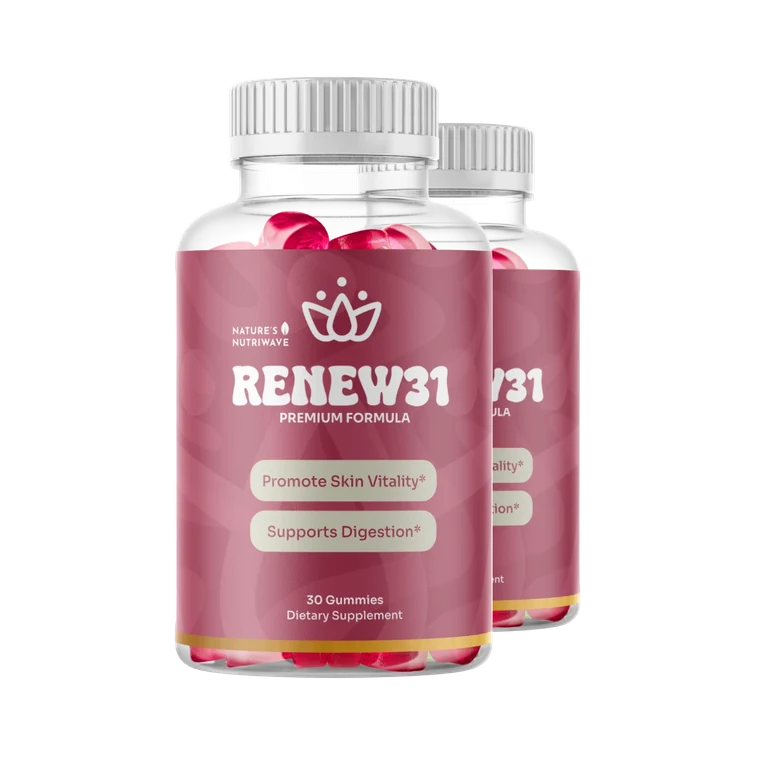
The same offer every time this card appears. The pack’s own note beside its figures is to confirm them at the live checkout before you pay.
1 of 10 ingredients with an amount of its own
“The quantitative amount by weight specified for the proprietary blend shall be the total weight of all other dietary ingredients contained in the proprietary blend”
Now the method, which is what is left when you take the product out of the writing. Start with the thing that decides whether any of the rest is possible: does the panel print an amount for every ingredient, or one total for a group of them?
On this panel it is one total. Bacillus coagulans sits on its own row at 500 Million CFU, and then a single line reads Proprietary Blend 430 mg with nine names indented underneath it and nothing in the amount column beside any of them. So a total and nothing else is what the regulation asks for, and the nine missing figures are not a violation of anything. A site that leads with outrage here has misread the format.
3 statements, and the fourth is a trap
“Dietary ingredients contained in the proprietary blend that are listed under paragraph (b)(3) of this section (i.e., “other dietary ingredients”) shall be declared in descending order of predominance by weight, in a column or linear fashion, and indented under the term “Proprietary Blend” or other appropriately descriptive term or fanciful name.”
5 checks the format removes
01 The second habit
On this label nine of the ten amounts do not exist, so the frame these pages give is all a reader gets.
NIH’s Office of Dietary Supplements, NCCIH, and the NIH LiverTox and LactMed monographs publish pages written for readers rather than for researchers, and plain about thin evidence.
They describe an ingredient at the amounts and in the populations that have actually been studied, which is the only frame in which an amount means anything.
FDA says of itself “The FDA does not approve dietary supplements for any purpose.” and “The FDA does not generally review dietary supplements before they are sold to consumers.” A page that does not exist means nothing published either way.
3 of 10 ingredients with a page under their own name
Coverage, counted honestly. Three of the ten ingredients have a federal consumer page published under their own name — fenugreek, ginger and dandelion, all three at NCCIH. Four appear in the federal record only inside an NIH monograph a consumer would not think to look for: babchi inside LiverTox’s page on Psoralen, fennel inside LactMed, and lemon balm, lion’s mane and slippery elm inside LiverTox pages of their own. Chicory root inulin has no federal consumer page anywhere — ODS, NCCIH, MedlinePlus and LiverTox were all checked and none exists; the only federal document is a labelling guidance about dietary fibre. And Bacillus coagulans has no species page anywhere: there are general probiotic pages at NCCIH and ODS, and nothing about this organism.
6 of 10 ingredients lost a consumer layer in July 2025
One piece of context explains why so many rows on these pages read no federal consumer page, and it is recent. MedlinePlus prints this at the top of what used to be its herbs and supplements section: “As of July 29, 2025, the herbs and supplements information from the Therapeutic Research Center (TRC) Natural Medicines Comprehensive Database is unavailable.” For six of these ten ingredients, the federal consumer layer that existed until July 2025 is gone. That is not the seller’s fault and it is not a criticism of the product. It is the reason a reader who goes looking for babchi or chicory inulin or slippery elm on a government site in 2026 will find less than they would have found in 2024, and it is why the LiverTox and LactMed monographs do so much of the work on these pages.
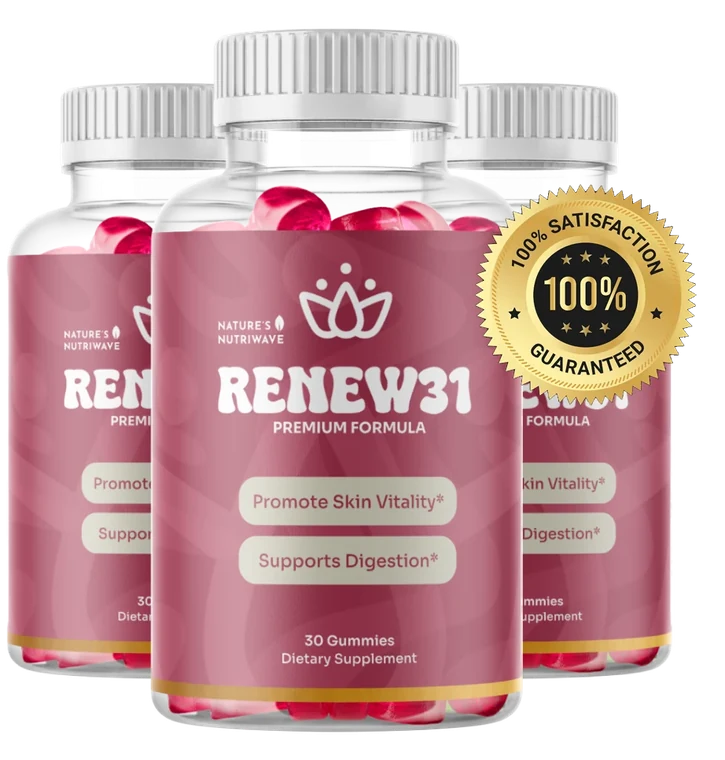
The same offer every time this card appears. The pack’s own note beside its figures is to confirm them at the live checkout before you pay.
30 days a bottle, which is what everything divides by
| Pack | A bottle | In total | Days of supply | A day |
|---|---|---|---|---|
| Two bottles | $79 | $158 | 60 days | $2.63 |
| Three bottles | $69 | $207 | 90 days | $2.30 |
| Six bottles | $49 | $294 | 180 days | $1.63 |
Three packs and no single bottle. A bottle is 30 gummies at one a day, so every figure in the last two columns is a division of the first two.
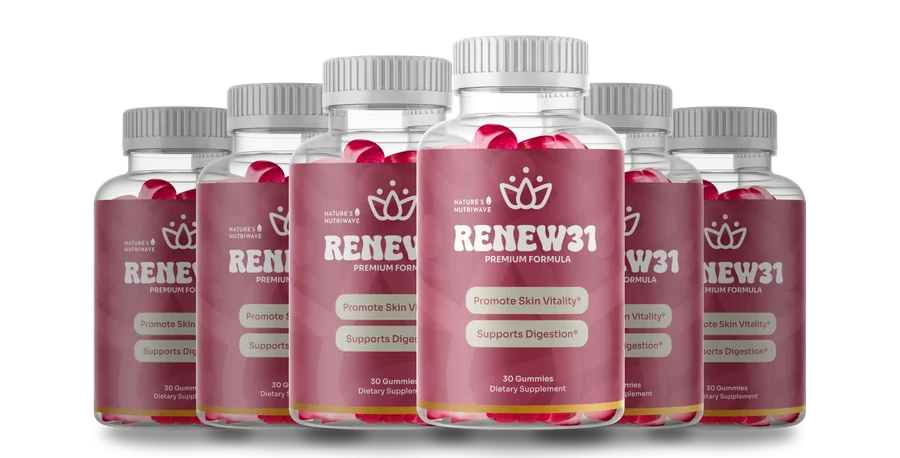
The same offer every time this card appears. The pack’s own note beside its figures is to confirm them at the live checkout before you pay.
$179 behind all three packs
Divide. Quote the rule. Add the line nobody published. Then hold the supply against the window.
Divide each struck-through total by the number of units in the pack. Here: 358 ÷ 2 = 179, 537 ÷ 3 = 179, 1,074 ÷ 6 = 179. One reference price of $179 a bottle sits behind the whole range.
The Federal Trade Commission’s Guides Against Deceptive Pricing, at 16 CFR 233.1(a) and (d). This site does not say that this seller’s $179 is fictitious. The same section is explicit that a former price is not necessarily fictitious merely because no sales at it were made.
No shipping cost, carrier or transit window was supplied for this product, and it is the one money figure here that has to be read at the checkout.
The window is 60 days from purchase and sales also asks for at least 30 days of use, so 60 − 30 = 30. The two-bottle pack is exactly as long as the window.
0 pricing records supplied, so no conclusion drawn
“If the former price is the actual, bona fide price at which the article was offered to the public on a regular basis for a reasonably substantial period of time, it provides a legitimate basis for the advertising of a price comparison.”
“not necessarily fictitious merely because no sales at the advertised price were made.”
Whether $179 was ever a bona fide offering price is a question about this seller’s own pricing history, and nobody has shown this desk that history. The arithmetic is the finding; the verdict is not available. The pack’s own instruction beside its figures is “Confirm live checkout.” — a sensible one, and this site repeats it every time it prints a price.
4 steps, in this order, every time
Babchi Powder is Psoralea corylifolia. The human evidence that made its constituent bakuchiol famous is a 0.5% cream applied to the face twice daily for twelve weeks in 44 participants, with no oral arm. This product is swallowed. A topical result does not transfer to a swallowed gummy, and saying so is not a criticism of the trial.
NIH LiverTox, under Psoralen — not under babchi, not under bakuchiol, which is why a consumer searching those words finds nothing.
No reader is told they will be harmed, nobody already taking the product is told to stop, and no FDA action naming babchi, bakuchiol or Psoralea corylifolia was found — which is an absence rather than a clearance.
Take the bottle, not a printout, and ask before starting if you are on any medication or have any liver condition.
In that order the passage is accurate and useful. In any other it becomes either an alarm nobody can act on or a reassurance nobody earned. The full version is in the post on the cream and the powder, and the published cautions for the whole panel are on the side-effects page.
02 What to carry away
“Likelihood score: C (probable rare cause of clinically apparent liver injury)”
Six habits, and not one of them needs a laboratory. Taken together they are the whole of what this desk does to a bottle: read the regulated surface, say what the rule permits, count what the federal record holds, divide the money, quote the monograph in its own words, and send the hard question to somebody qualified to answer it.
Questions
Yes. Nine of the ten dietary ingredients are inside it and it is declared at 430 mg with no amount for any member. Only the Bacillus coagulans sits outside it and carries its own figure.
It is the total weight of all nine blend members together, which is what 21 CFR 101.36(c)(3) requires. It is not the amount of any one of them. Each of the nine weighs no more than 430 mg; all nine together weigh 430 mg; and 430 divided by 9 is 47.8 mg, which is an average nobody printed and which the ordering rule guarantees is nobody’s actual amount.
Yes. 21 CFR 101.36(c)(3) requires the quantitative amount for a blend to be “the total weight of all other dietary ingredients contained in the proprietary blend”, and that is what 430 mg is. Declaring only the total is lawful and this site says so plainly. The criticism on these pages is not that a rule was broken; it is that the rule leaves a reader unable to check anything.
Not printed. Babchi powder is listed second of the nine inside the 430 mg blend, so by the descending-order rule it is the second-heaviest of them and no more than 430 mg. No closer figure exists anywhere on the bottle, and there is no established oral amount for babchi for any purpose on this label to compare it with even in principle.
Nobody supplied a reason, and here is the arithmetic that raises the question. The struck-through totals are $358, $537 and $1,074. 358 ÷ 2 = 179. 537 ÷ 3 = 179. 1074 ÷ 6 = 179. One figure of $179 a bottle sits behind all three packs. FTC’s 16 CFR 233.1(a) makes a former price a legitimate comparison “If the former price is the actual, bona fide price at which the article was offered to the public on a regular basis for a reasonably substantial period of time”. This site does not say that $179 is fictitious. Whether it was ever a bona fide offering price is a question of fact about this seller’s history that nobody has shown this desk.
Partly because they never had one, and partly because of a date. MedlinePlus prints “As of July 29, 2025, the herbs and supplements information from the Therapeutic Research Center (TRC) Natural Medicines Comprehensive Database is unavailable.” For six of these ten ingredients, the federal consumer layer that existed until July 2025 is gone. That is not the seller’s fault; it is why the LiverTox and LactMed monographs do so much of the work on these pages.
Yes. A link from this site to the sales page may earn a commission, which is exactly why the editorial rules are written down and dated, and why the reviews page, which would be the warmest page here, ships without invented customers, while the medical review is signed by Dr. Savita Srivastava, MD, for accuracy against the label and the cited sources.
References
Next
Eight steps, worked on this panel, with the four traps underneath them.
Read itThe skin page that exists, the page that does not, and the probiotic figures.
Read itThe 430 mg line, the rule behind it, and the one inference it allows.
Read it30 gummies a bottle, two a day, thirty days a bottle. Ten ingredients, ten printed amounts, no proprietary blend, and about 430 mg of declared actives a serving. Price and guarantee are read from the live checkout. Order support +1 (302) 200-3480.
From $49 a bottle by pack size · 60-day window from purchase, and 30 days of use asked for · ships from inside the US · order support +1 (302) 200-3480
What this page was checked against
Every figure on this page is either printed on the label or derived from what is printed, with the derivation shown beside it. The medical review sits in the block alongside.
Medical review Dr. Savita Srivastava
Reviewed for accuracy against the label and the cited sources. General information, not personal medical advice. Who reviews these pages?